Tomatoes, Teamwork, and Transformation: The Story of the Maine Marinara Collaborative
With its roots in Portland Public Schools and its vision reaching across the entire state, the Maine Marinara Collaborative (MMC) is transforming the way institutions source, serve, and think about local food. Born from a desire to connect Maine farms to institutional kitchens—even those with limited capacity—MMC is a model of cross-sector collaboration, regional economic investment, and values-driven innovation.
Launched as a priority of the Maine Food Convergence Project and with support from the 2022 New England Food Vision Prize, MMC set out to create a shelf-stable, locally-sourced marinara sauce that institutions could serve easily, regardless of equipment or staffing limitations. The recipe needed to meet K–12 nutritional guidelines, appeal to a broad base of customers, and be affordable at scale. Importantly, it had to support local farmers, food processors, and equitable food access goals across the state.
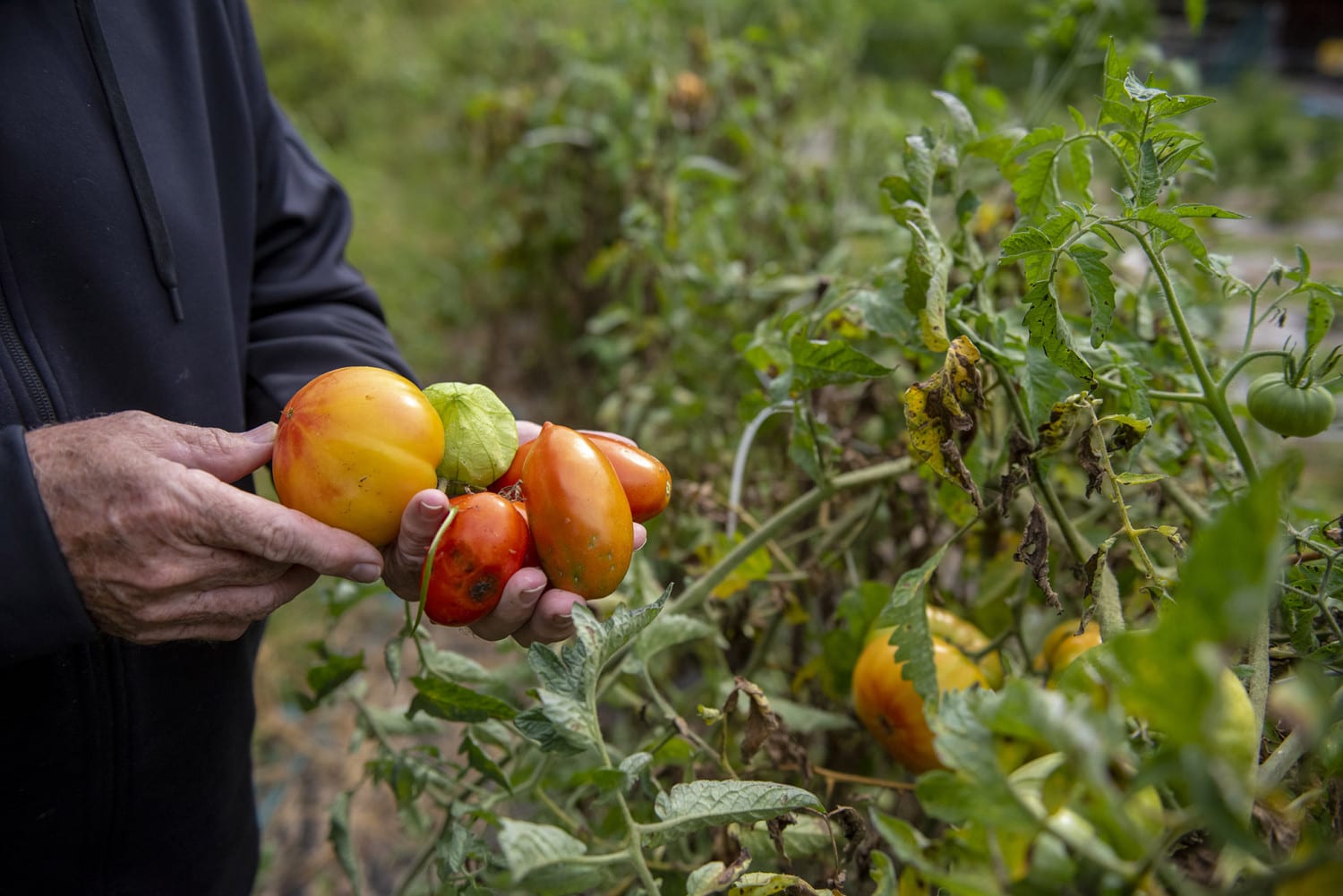
Marinara sauce may seem simple, but in Maine, it has become a symbol of systemic change. The original recipe, developed in Portland Public Schools, was adapted for commercial production and shelf-stability. Extensive taste tests—with students, nutrition directors, and other institutional buyers—helped refine the product. Each batch was made from 51% Maine-grown produce, with sourcing prioritized from historically underserved and immigrant-owned farms.
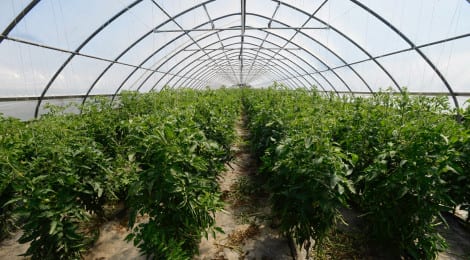
The collaborative also invested in the infrastructure needed to support year-round production. At the Maine Food Group’s facility, MMC renovated a blast chiller to process, freeze, and store fresh produce, ensuring a reliable ingredient supply throughout the year. To scale farm operations, the project provided immigrant farmers with critical tools and supplies—harvest totes, tomato stakes, irrigation equipment, and more—strengthening their capacity and long-term viability.
Equally important were the relationships that MMC built across the food system. Weekly workgroups and more than 75 convenings and trainings helped cultivate deep collaboration among farmers, food service directors, processors, and policymakers. By sharing risk through forward contracts and assuming product liability, MFSC made it possible for institutions to commit to purchases and farmers to commit to crops—de-risking participation for all partners.
Reaching Students and Communities
While school cafeterias were a central focus, the marinara also reached health institutions and community groups. Nineteen school districts—representing 75 schools and over 31,000 students, or 18% of the state’s K–12 enrollment—served the sauce.
MMC didn’t just feed people—it engaged them. Youth from the Isuken Food Truck Cooperative developed social media campaigns and served Somali-style sambusas with marinara at school events, adding cultural and educational value to the project. Culinary interns from the University of Southern Maine helped conduct national research and taste tests, gaining hands-on experience while supporting a real-world initiative.
The sauce also achieved policy impact: it became the first lightly processed product approved for reimbursement under Maine’s Local Foods Fund, setting a precedent for future innovation in institutional procurement.
Building for the Future
In its first year, MMC turned more than 9,200 pounds of locally-grown produce from seven farms into 3,000 gallons of marinara. But the project didn’t stop there.
With new support through a $1.3 million USDA Regional Food System Partnership grant, MMC is now working with Fork Food Lab to expand the processing of “seconds”—imperfect but perfectly edible vegetables that often go to waste. This will create a new market for farmers and provide more affordable, value-added ingredients for institutional kitchens.
MFSC has also committed to funding MMC through 2025, incorporating feedback from school nutrition staff to refine the recipe and transition to a 20-pound case with a re-closable spout for easier use. In collaboration with Commonwealth Kitchen and Farm Fresh Rhode Island, MMC is exploring opportunities to incorporate USDA-donated tomato paste under the Net Off Invoice (NOI) program, which could reduce ingredient costs by up to 20%.
As it continues to grow, MMC is expanding its impact with a 2025 New England Food Vision Prize that will support developing additional tomato-based products for K–12 and institutional markets. The project will bring together three Maine school districts, a local food processor, and Maine farms to create sustainable, locally sourced ingredients that kids love. With a focus on taste, nutrition, and accessibility, MMC is showing what’s possible when local food innovation is rooted in collaboration, equity, and a shared commitment to community health.
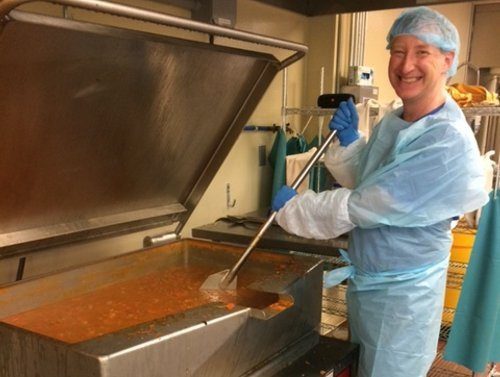
Chef Ron Adams stirs up the marinara!Students give the marinara a thumbs up.